

Buying property in Japan as a foreigner: rules and prices in 2026
Updated on
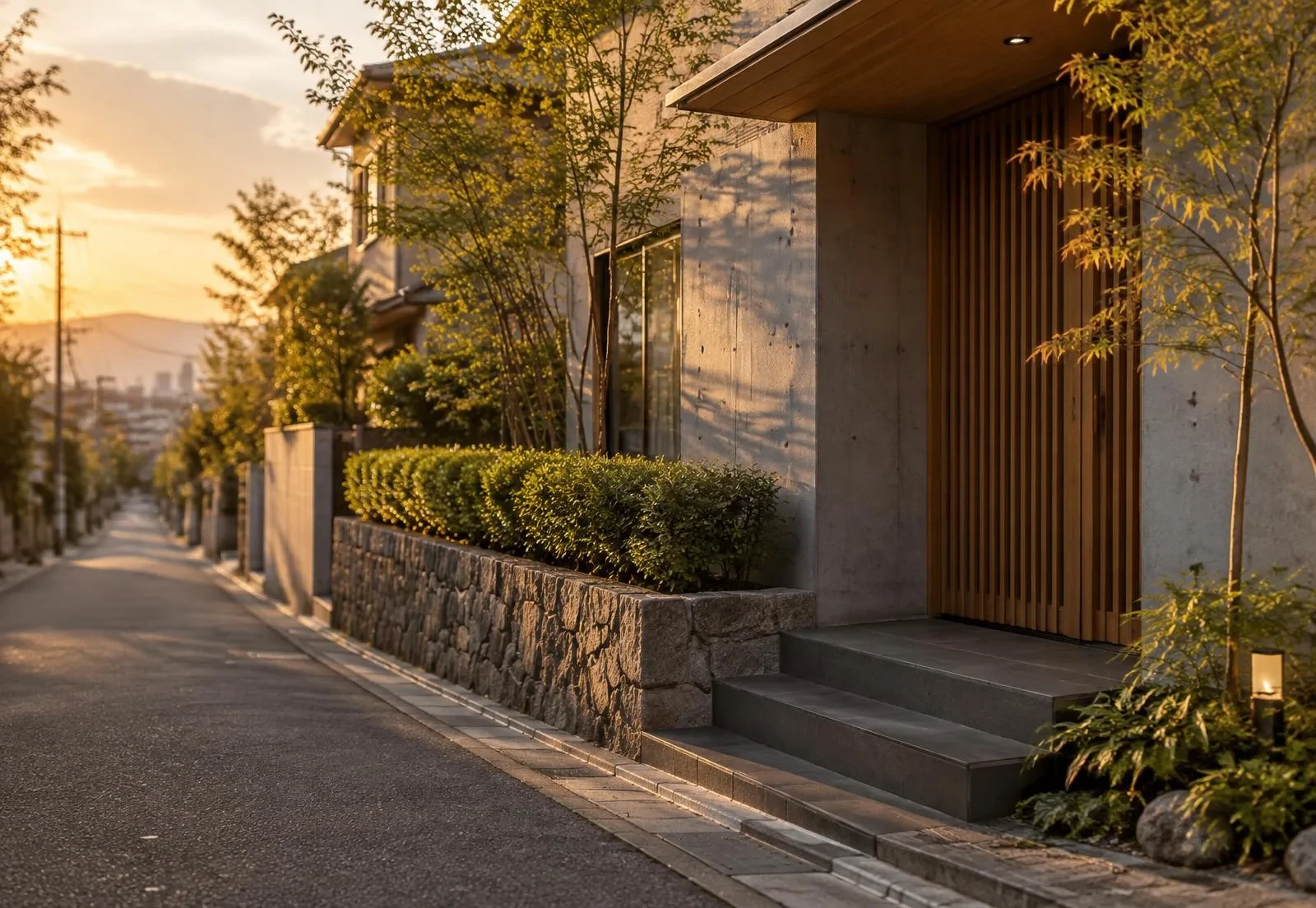
Yes, a foreigner can buy an apartment or a house in Japan, with no nationality or visa requirement. But buying gives no right to live in Japan, financing remains difficult and prices in Tokyo are at record highs. Here are the rules in force in 2026.
Can foreigners buy property in Japan?
There is no residence, visa or nationality requirement to buy property in Japan. The exceptions are farmland, which requires a permit, and some sensitive areas, which require prior notification (E-Housing).
The key point: owning property gives you no right to live in Japan. To settle here, you need a status of residence, explained in our guide to Japan visa renewal fees.
What changed in 2026
- Nationality recorded at registration: since 5 October 2026, buyers declare their nationality when the property is registered. It is kept internally and does not appear on the public register extract (E-Housing; Adnkronos / Jiji Press).
- Reporting by non-residents: a non-resident buyer must report the purchase to the Minister of Finance, through the Bank of Japan, within 20 days. The exemption for buying a personal residence was removed on 1 April 2026.
- Agency fees for non-residents: since 1 October 2026, non-residents pay consumption tax on agency fees, which were previously exempt.
Property prices in Tokyo in 2026
New-build prices have reached unprecedented levels. From April to September 2026, the average price of a new apartment was as follows (Nippon.com / Jiji Press):
| Area | Average price of a new apartment | Change over one year |
|---|---|---|
| Tokyo's 23 wards | ¥179.25 million | +34.7% |
| Greater Tokyo | ¥114.94 million | +21.1% |
Land prices are rising too. On 1 July 2026, the average land price in Japan was up 1.5% over one year (+1.0% for residential, +2.9% for commercial), the fifth consecutive rise. Tokyo recorded the biggest increases, and a benchmark residential plot in Akasaka (Minato) reached ¥7.5 million per m² (The Nation, citing the Ministry of Land, Infrastructure, Transport and Tourism).
The real obstacle: getting a mortgage
For a foreigner, getting a loan is the main difficulty. The Flat 35 loan requires Japanese nationality, permanent residency or special permanent residency. With other lenders, permanent residency is still the key, and only a few accept holders of a work visa (E-Housing).
The requirements for permanent residency are getting stricter: see our guide to Japan permanent residency.
Fees and taxes to budget for
Allow 6 to 9% of the purchase price on top of the price, according to E-Housing. The main items:
- Agency fees: capped, starting at 5.5% on the first ¥2 million, with lower rates above that.
- Registration tax on the land: 2% (1.5% until 31 March 2029).
- Acquisition tax: 3% of the assessed value for the home and residential land, after deductions.
- Stamp duty: ¥10,000 for a contract between ¥10 million and ¥50 million.
Every year after that, property tax is 1.4% of the assessed value, plus a 0.3% city planning tax in Tokyo's 23 wards. A non-resident owner must appoint a tax representative in Japan.
Check the earthquake resistance
The current earthquake standard (shin-taishin) applies to building permits issued since 1 June 1981. The permit date is what counts, not the completion date: a building finished in 1982 may fall under the old standard. The rules were tightened again in 2000 for wooden houses (Plaza Homes).
During the 2016 Kumamoto earthquake, 28.2% of wooden houses built before 1981 collapsed, compared with 8.7% of those built from 1981 to 2000 and 2.2% of those built after 2000. These figures come from the Ministry of Land, Infrastructure, Transport and Tourism, as cited by Plaza Homes. Read more in our earthquake preparedness guide.
Rent first, buy later
At these prices, many newcomers rent first to get to know the neighbourhoods. Our guide to renting in Tokyo covers rents and move-in costs. Kizuna Relo helps you find the right home for your budget and neighbourhood: see our home search service.
Frequently asked questions
Sources
- E-Housing, 7 September 2026: buying rules, financing, fees and taxes
- Adnkronos / Jiji Press, 16 December 2025: nationality in the property register
- Nippon.com / Jiji Press, 20 October 2026: new apartment prices
- The Nation, 15 September 2026: land prices
- Plaza Homes, 1 October 2026: earthquake standards
Related guides
Updated on
Renting an apartment in Tokyo as a foreigner: rents and costs in 2026
Average rents, move-in costs and what landlords expect: the essentials for renting an apartment in Tokyo as a foreigner.
Updated on
Permanent residency in Japan: requirements, exceptions and fees (2026)
Length of residence, exceptions, requirements and fees: where the rules for permanent residency in Japan stand.
Updated on
Earthquake preparedness in Tokyo: what to do when you have just moved in
Alert apps, the 1981 building standard, supplies: three things to do in your first week in Tokyo.